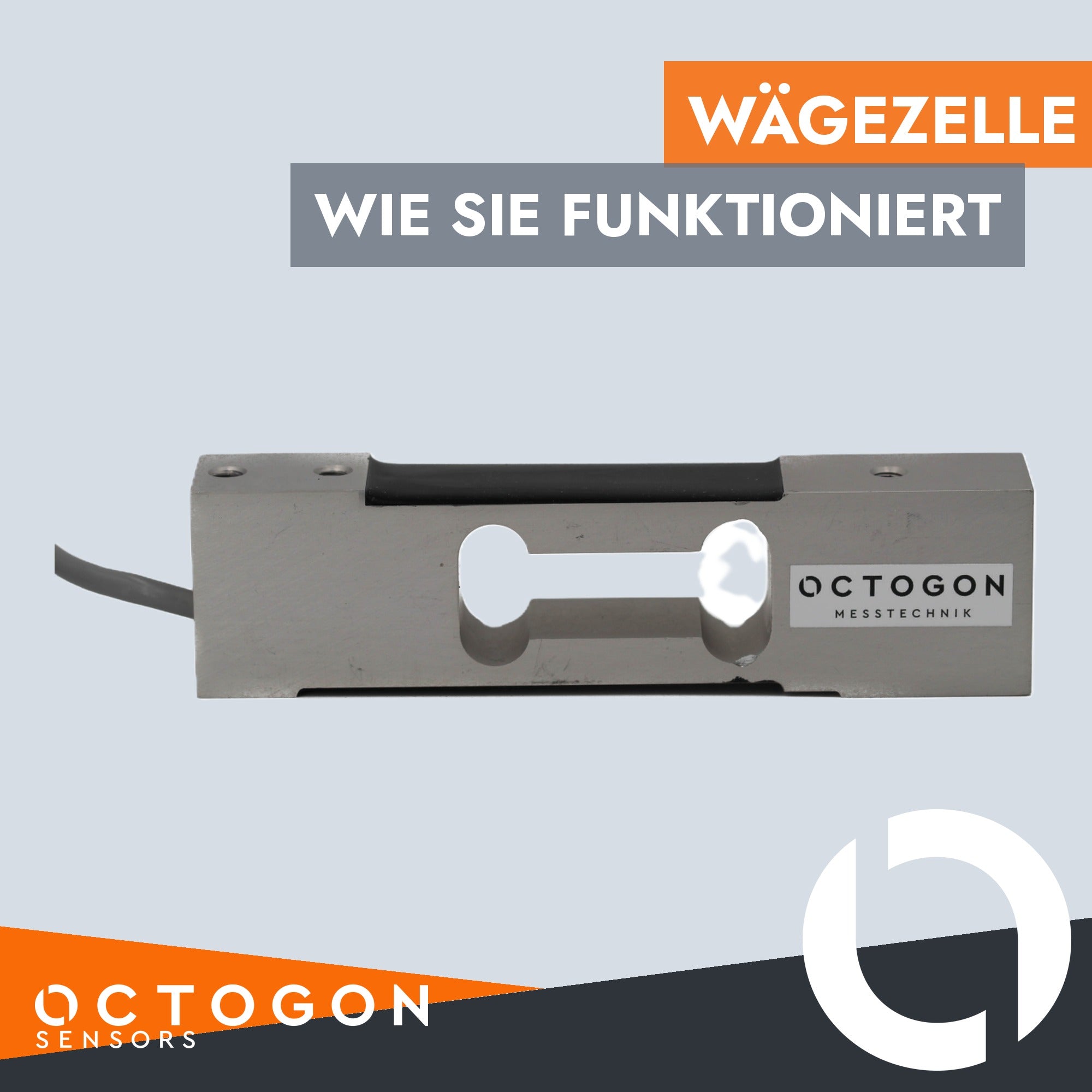
A load cell converts weight into an electrical signal by using strain gauges mounted on an elastic spring element.

Load cells measure force or weight by converting the mechanical input force into an electrical output signal. This is done using strain gauges that are mounted or applied to the load cell's spring element. Under load, the strain gauges deform along with the load cell's spring element. A measurement signal, usually in mV/V, is obtained through a change in the resistance of the strain gauge proportional to the load.
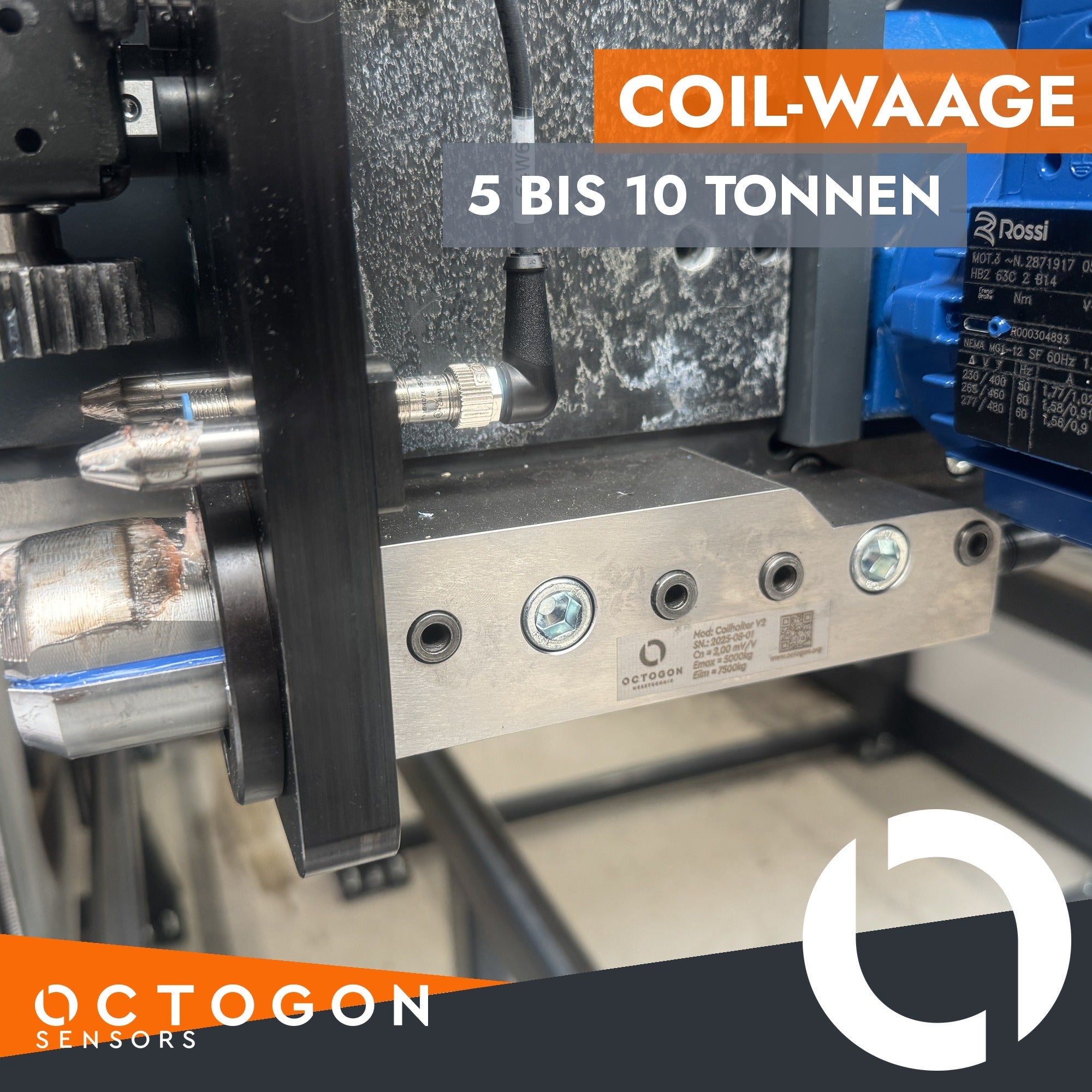
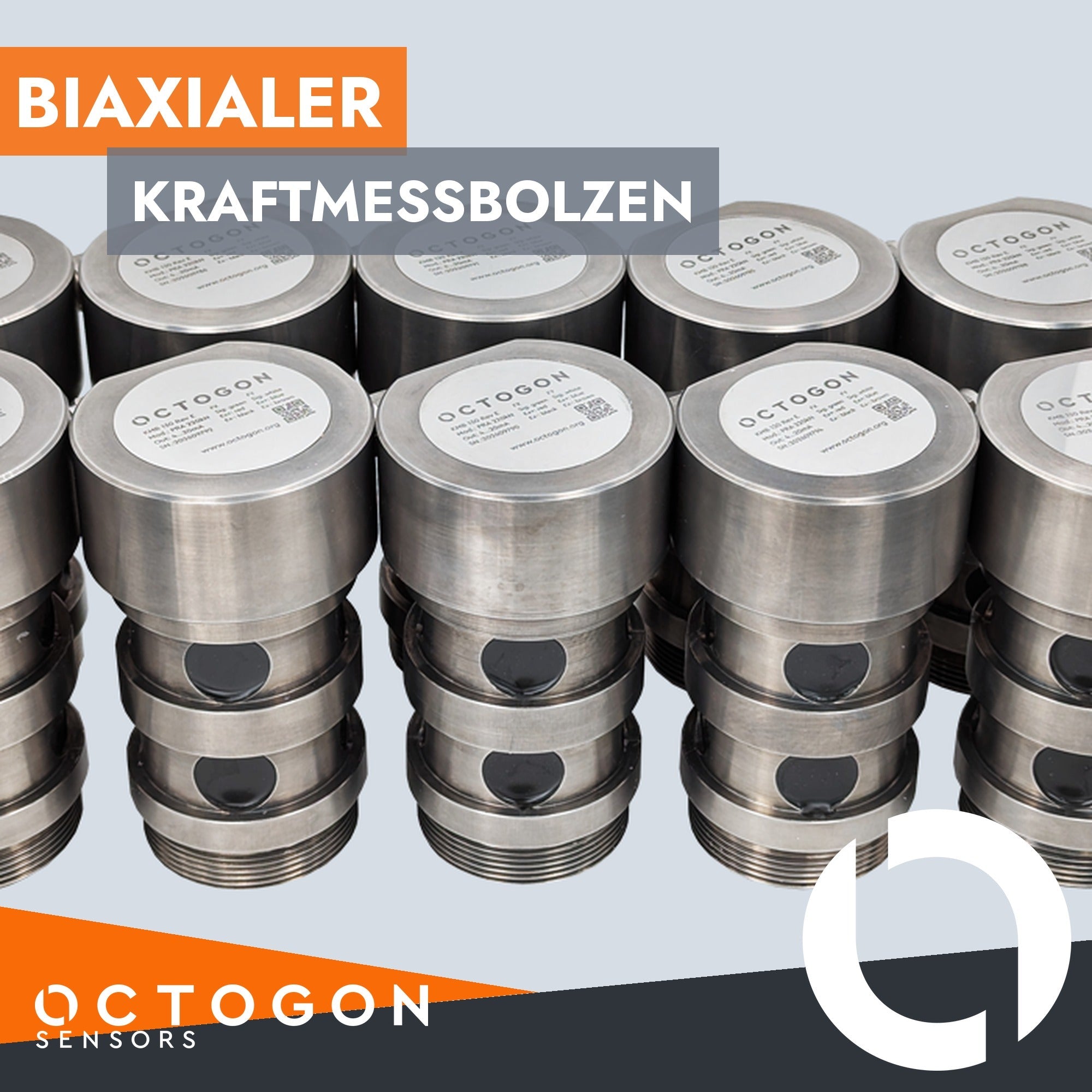
In most cases, the spring element is made of steel or aluminum — materials that are both robust and minimally elastic. Generally, low nominal loads are made of aluminum, and very high nominal loads are made of stainless steel. For stainless steel load cells, we at octogon predominantly use 17-4 PH or 1.4542. In certain applications, the available installation space is severely limited, so that - often with so-called load or force measuring pins - only a very small diameter can be achieved. If this cannot be increased, a particularly high-strength steel must be used.
Load cells are versatile, robust sensors that provide precise measurement results. Depending on the application, the design and material of the cells can be adapted to perform the desired measurement and to meet the loads or special requirements.
The right load cell for the respective application
To ensure precise measurement results, the selection of the right load cell is crucial - depending on the installation situation, load, and ambient conditions. The selection of the right load cell requires special know-how and, above all, a lot of experience. Given the wide variety of designs, measuring ranges, and applications, professional experience is essential to find the optimal solution for your application. We would be happy to support you in finding a suitable solution together.
The most common load cell types briefly presented:
- Platform load cells are mostly used - as the name suggests - under platforms, which are loaded with a weight from above
- Bending beam load cells are predominantly found under steel constructions. Often, 3 or 4 units are installed in the same construction, on which the weight is distributed
- Compression load cells are often used when a construction is subjected to weight from above - e.g. by material, machine components or dynamic loads. The load cells detect the vertical forces and enable exact determination of the total weight as well as load distribution control across all measuring points
- Tensile load cells, where one or more weights are suspended from load cells, whereby the resulting tensile forces are detected and used for weight measurement, e.g. in big bag scales
Important influencing factors for load cells
The environment in which a load cell is used plays a decisive role for the measurement result. There are countless factors and circumstances that can be taken into account. The following will focus on the two most common and important ones:
Ambient temperature or temperature in general
Every material reacts to temperature changes – it expands when warm and contracts when cold. This also applies to load cells and especially to strain gauges (SG) that are mounted/applied to the spring element. These temperature-related changes also change the electrical resistance of the SGs – which could influence the measurement results.
To ensure that load cells deliver reliable and precise results worldwide under the most diverse temperature conditions, they are equipped with special temperature compensation. This compensates for temperature-related influences on the measurement signal – for exact weight measurement, regardless of the ambient temperature. An application - e.g. in a steel mill - often requires load cells to withstand significantly higher temperatures. We therefore offer our customers custom-made load cells for high-temperature applications up to an ambient temperature of 250 °C.
Side forces or parasitic forces
Depending on the technical environment – for example, in container weighing, silo weighing or in a conveyor belt scale – in addition to the actual weight force, undesirable additional loads can act on the load cell. Such "parasitic forces" - often side forces - arise when the load cell is loaded not only in the intended main direction, but also laterally, from below or in other axes.
Since load cells are specifically designed for a defined force absorption, these lateral or undirected forces can lead to inaccurate or incorrect measurement results.
To avoid this, particular attention must be paid during installation to ensure that no parasitic forces act on the measuring chain. We therefore offer our customers to check their respective applications or installation environments to avoid falsification of the measurement result due to such influences.
Our load cell installation kits and weighing modules are designed precisely for this - they help users to minimize parasitic forces and side forces - and thus sustainably improve measurement accuracy.
Load cells in the field
More than just scales: Diverse applications of load cells
Of course, load cells are often used in classic scales – but their range of applications is much wider. One example is filling systems: Here, a load cell is located under each bottle or can, precisely measuring when the desired filling quantity has been reached. Load cells are also used in sorting systems, for example in the food industry – for instance, in the automatic portioning of sweets, potatoes, or nuts. The products are distributed in such a way that each package contains exactly the same weight.
Whether in packaging technology, the process industry, or in mechanical and plant engineering – load cells ensure precision and process reliability wherever weight plays a role.
Accuracy is decisive – regardless of the application
No matter what application a load cell is used in – measurement accuracy is crucial for the quality and reliability of the entire process. Load cells are available in various nominal loads. The nominal load here refers to the maximum intended load for which the load cell is designed.
In addition, load cells are divided into different accuracy classes. With the proven SG technology (strain gauges), our sensors predominantly achieve accuracy classes C and D, which are completely sufficient for many industrial applications. For applications with particularly high requirements – such as precision scales or legal-for-trade systems – SG load cells with electronic correction are used to achieve optimal results even in higher accuracy classes.
The weighing of goods is strictly regulated – especially if the weight measurement serves commercial, medical, or legally relevant purposes. Depending on the type and value of the product, different requirements apply to the accuracy class of the load cell used:
- Goods of lower value – such as sand, gravel, or bulk goods – may be weighed with load cells of accuracy class D. Here, the robust, economical solution is in the foreground
- For consumer goods such as meat, fruit, or vegetables, accuracy class C is prescribed. It already places high demands on the weighing system used
- In sensitive areas such as the pharmaceutical industry, the highest classes A or B are required – here, maximum precision is crucial
- Also in technical applications such as mechanical engineering or in building material scales for additives, accuracy class C is common and necessary
These requirements follow international standards such as OIML R60, which specifies precise limits. Especially in the higher accuracy classes, the measurement deviations may only be a few millionths of the nominal measuring range – i.e. parts per million (ppm). This presents significant technical challenges for the development and production of modern load cells – which we meet with precise manufacturing, high-quality materials and intelligent signal processing.
Adjustment, calibration, and verification – for reliable measurement results on-site
For a load cell to measure reliably and accurately in real use, factory adjustment alone is often not enough. In practice, the load cell is therefore not only calibrated in the factory, but in many cases also verified at the point of use. During calibration and verification, the load cell is loaded with known reference weights. If the load cell actually displays 1,000 g when one kilogram is placed on it – and not, for example, 857 g – it meets the requirements of the respective accuracy class.
Such tests are essential to ensure measurement accuracy and at the same time to identify possible sources of error – such as parasitic forces, which can arise due to faulty installation or unfavorable external influences. Only through this careful checking can it be ensured that the load cell delivers reliable and reproducible results during operation – regardless of environmental influences or installation situation. We support you in this challenge with our standard highly accurate factory calibration and also offer calibration according to DIN EN ISO/IEC 17025 .
Are you interested in our products or services? Contact us and we will find a solution for your metrological challenge together.