A load cell is to a large extent a machined part. The electronics matter, but they cannot repair what the spring element gets wrong. How a transducer deforms under load — and whether it returns exactly to where it was after unloading — is decided by geometry and material.
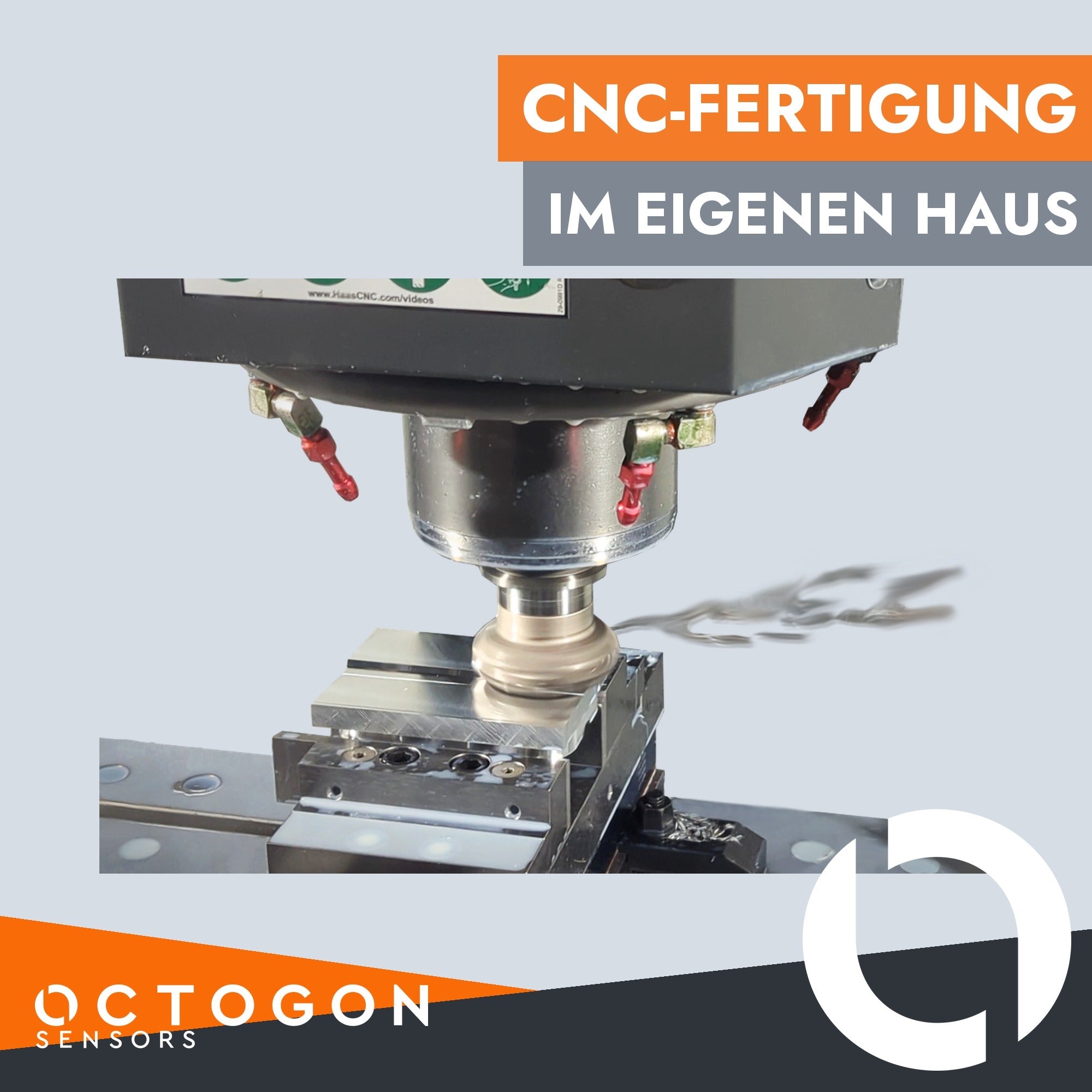
That is why we machine in house. Not as a side business, but because it is the part that decides measurement quality.
What comes from one source

The chain is closed because the handovers between companies sit exactly where problems arise on precision parts: after hardening the part has moved, the coating sits differently than expected, the tolerance was right before welding and no longer is afterwards.
We work with high-strength steels, stainless steels, titanium and aluminium — materials that cannot be machined arbitrarily and that react sensitively to heat management. Details on the scope of services are on the page CNC milling and turning.
Why this makes the difference on custom transducers
The most common case here is not the catalogue item but: “we have 40 mm of installation space, 250 kN, and a bore that has to stay.” The transducer is then designed around the installation situation.
Having design and machining under one roof shortens that loop considerably. A geometry that cannot be milled economically is noticed during design and not only in production. And a prototype is a slot in the machine schedule, not an order with a lead time.
How such a project runs is shown on our page on custom force transducers. What happens electrically afterwards is in How does a load cell work?.
Where manufacturing turns into measurement quality
Three points on the spring element decide whether a good cell comes out at the end.
The geometry of the deformation zone. It sets how large the strain is at rated load and how linearly it grows with the load. Too stiff means a small signal; too soft means creep and sensitivity to overload.
The heat treatment. Hardening and tempering bring the material into the state where it stays elastic instead of taking a set. Outsourcing this step means losing control over the most important part of the characteristic curve.
The surface at the measuring point. This is where the strain gauge is applied later. Grinding, lapping and polishing are not cosmetics here but the precondition for the bonded area to survive for years.
Also without a sensor
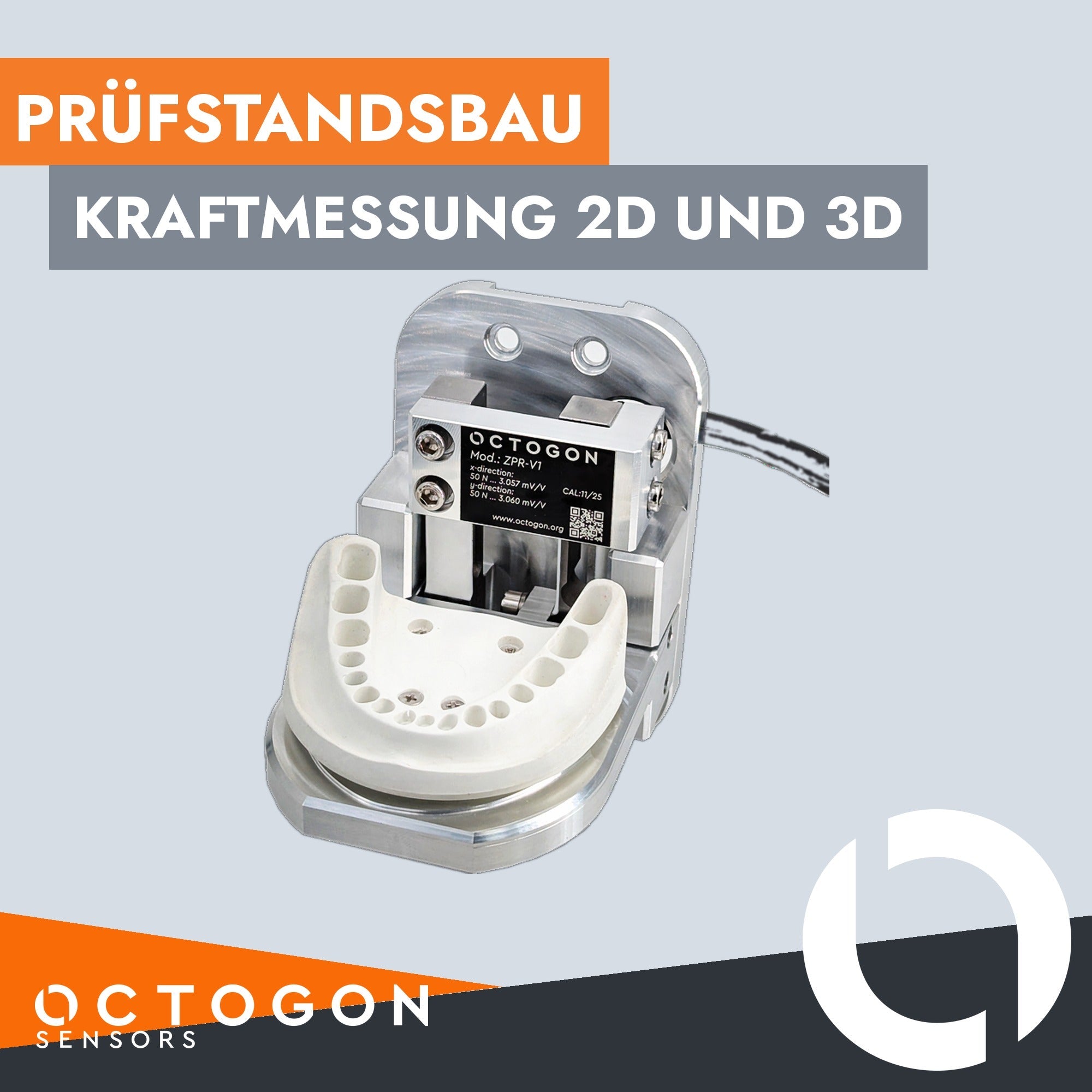
Not every part that leaves our machines measures something. We also produce plain contract parts and assemblies — for customers in automation and robotics, aerospace and defence. Fields in which documentation and traceability are not an added wish but a requirement.
On request we deliver ready for installation. Laser welding is part of that — with us mainly for hermetically welded transducers, which are then sealed to IP68.
Around the machining
Machining is one building block among several here. For complete tasks, these come with it:
- Strain gauge application — bonding gauges when a component itself becomes the transducer
- Electronics development — when signal conditioning and interface should come along
- Test rig construction — mechanics, sensors and evaluation as one setup
- Calibration to ISO 17025 — with a certificate before delivery
Send us the drawing
For a quotation we need a drawing or model, the material, the quantity and the tolerances that genuinely matter — the last point is the one that sets the price. If you are not yet sure about the material or about a design suited to manufacturing: we sort that out with you.
Write to office@octogon.org, call +43 676 3628453 or use our contact form.